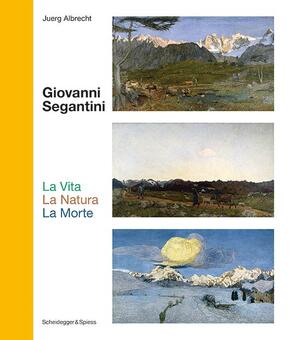
Giovanni Segantini. La Vita - La Natura - La Morte - Schlüsselwerke der Schweizer Kunst
Reduzierte Artikel in dieser Kategorie

5,99 €
15,99 €
10,99 €
5,99 €
8,99 €
10,99 €
| Verlag | Scheidegger & Spiess |
| Auflage | 21.04.2022 |
| Seiten | 160 |
| Format | 22,1 x 2,1 x 25,4 cm |
| Gewicht | 990 g |
| Reihe | Schlüsselwerke der Schweizer Kunst |
| ISBN-10 | 3039420720 |
| ISBN-13 | 9783039420728 |
| Bestell-Nr | 03942072A |
Giovanni Segantini's (1858-99) three paintings
La Vita-La Natura-La Morte
(Becoming-Being-Passing) of 1898-99 at first glance reveal nothing about their equally complex and interesting background. Segantini originally planned them for the 1900 Paris Exposition Universelle as a multimedia walk-through "Engadine Panorama" 722 feet long and sixty-feet feet high. He was forced to downscale the undertaking to three purely pictorial main paintings, which eventually remained unfinished due to the artist's premature death.
In this richly illustrated book, Swiss art historian and Segantini-expert Juerg Albrecht offers a fresh perspective on one of the last major Symbolist works of the fin de siècle. Drawing on previously untapped sources, Albrecht also traces the eventful genesis of this landmark work and places it in the context of Alpine painting and the mass-medium of the panorama. Moreover, he sheds light on Segantini's highly personal pantheism, which is rooted in the ideas of German Romanticism, as represented by Caspar David Friedrich and Philipp Otto Runge, but can also be related to programmatic paintings by Segantini's contemporaries Paul Gauguin, Georges Seurat, and Edvard Munch, and which finds idiosyncratic echoes in contemporary art, for example in the oeuvres of Joseph Beuys and the Swiss painter Franz Wanner.
