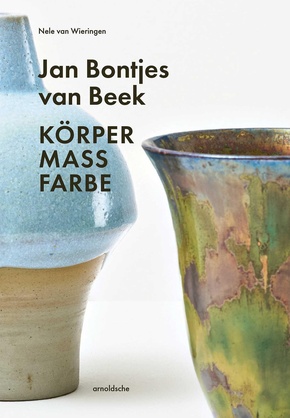
Jan Bontjes van Beek - Body | Scale | Color / Körper | Maß | Farbe
Reduzierte Artikel in dieser Kategorie

5,99 €
15,99 €
10,99 €
8,99 €
13,99 €
10,99 €
| Verlag | Arnoldsche Art Publishers |
| Auflage | 21.04.2026 |
| Seiten | 80 |
| Format | 23,9 x 16,7 x 0,9 cm |
| Gewicht | 282 g |
| ISBN-10 | 3897907526 |
| ISBN-13 | 9783897907522 |
| Bestell-Nr | 89790752A |
Jan Bontjes van Beek (1899–1969) lived a life intertwined with 20th-century German history. His ceramics, marked by materiality and color dynamism, reflected his search for balance amid turbulent times. Text in English and German.
The moving life of Jan Bontjes van Beek (1899–1969) is closely associated with 20th-century German history. A “strikingly blond sailor who could dance and play the violin,” he joined the Worpswede artist’s colony in 1919 and later found a home with the Breling family in Fischerhude, who introduced him to ceramics. With the support of his second wife, the architect Rahel Weißbach, he moved to Berlin in 1933, where his studio became a well-known meeting place for artists. Despite having been arrested by the National Socialists and his daughter Cato executed, he could not endure the GDR’s Socialist Unity Party regime either and stepped down from a teaching post at the East Berlin Weißensee art school in 1950. He broke into teaching in West Berlin and, finally, in Hamburg and continued his ceramic work, which provided the free thinker with a firm footing. Like no other, he emphasized materiality in form and dynamism in color. During tumultuous times, he sought out the perfect balance for his vessels, and ultimately for himself.
Text in English and German.
